

Our Strip Footing Expertise in Bundaberg
We’ve been installing strip footings across Bundaberg for years, and that hands-on experience means we understand what works in our local conditions. From coastal properties with sandy soils to inland sites dealing with reactive clays, we’ve poured footings in every soil type this region throws at us. That experience matters when you’re trusting someone with your building’s foundation.
Our team works directly with structural engineers, following their specifications exactly while bringing practical knowledge about Bundaberg’s ground conditions to every project. We know how deep footings need to go for different soil types, what reinforcement patterns work best, and how to manage water during excavation in our wet season.
Every strip footing we install gets the same attention to detail, whether it’s a small residential extension or a large commercial building. We don’t cut corners, and we don’t rush the process – we do it right.

What Are Strip Footings?
Strip footings are continuous concrete beams that run underneath your load-bearing walls, and they’re the foundation system that keeps your building standing strong for decades. You need them because they do one job better than anything else – they spread the weight of your entire structure evenly across the ground below. Without proper strip footings, your building’s weight concentrates in spots that can’t handle the load, which leads to uneven settlement, cracked walls, and structural problems that cost thousands to fix later on.
In Bundaberg, where we deal with reactive clay soils, seasonal wet conditions, and ground movement, strip footings become even more important. They’re engineered to handle our local soil conditions and weather patterns, giving your walls the stable base they need to stay straight and crack-free year after year.

Load-Bearing Wall Support Solutions

Strip Footings for New Homes
When you’re building a new home in Bundaberg, strip footings are the foundation system that everything else depends on. We install continuous concrete beams under every load-bearing wall in your home – external perimeter walls, internal structural walls, and any walls carrying roof or upper floor loads. The process starts with excavation to the depths specified in your engineer’s soil report, then we set up formwork, place steel reinforcement, and pour concrete that’s mixed to handle Bundaberg’s soil conditions.
Your new home’s strip footings are engineered specifically for your site, accounting for soil type, moisture levels, and structural loads. We make sure everything meets Queensland building codes and passes engineer inspections, so your home build stays on schedule without foundation delays or compliance issues.
Extensions and Additions
When you’re expanding your Bundaberg home or commercial building, new strip footings need to integrate seamlessly with your existing foundation system. We handle the technical challenges of tying new concrete into old structures, making sure your addition has the same structural integrity as your original building. Our team assesses your current foundation, designs strip footings that match the existing system, and connects everything properly so there are no weak points where old meets new.
Our extension strip footing services include:
- Proper excavation alongside existing foundations without disturbing them
- Doweling and bonding new concrete to old for structural continuity
- Matching footing depths and reinforcement to your current foundation specifications
- Working around existing services and utilities near foundation areas
Accurate Formwork Installation
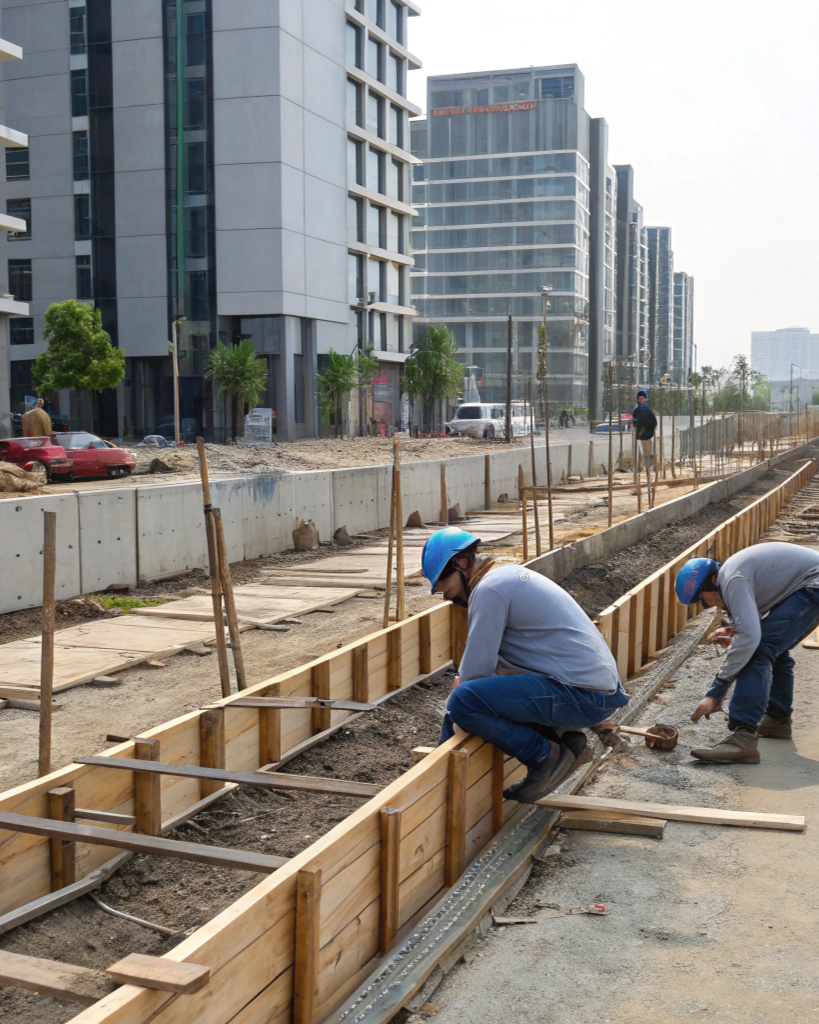
Formwork is what shapes your strip footings before the concrete goes in, and if it’s not set up accurately, your entire foundation is compromised from the start. We take formwork installation seriously because even a few millimetres out of alignment means your walls won’t sit properly, your floor levels end up wrong, and you’re fixing problems before your build even gets off the ground. Our team uses laser levels and precision measuring to set formwork exactly to your engineer’s specifications – correct width, depth, and alignment along the entire run of each footing.
We brace formwork properly so it doesn’t shift when concrete’s being poured, and we check everything twice before any concrete truck arrives on site. That attention to detail is what separates strip footings that perform perfectly from ones that cause headaches throughout your entire building project.
Frequently Asked Questions
Strip footings are continuous concrete beams that run underneath your load-bearing walls. You need them because they spread the weight of your building evenly across the ground, preventing uneven settlement and structural damage. In Bundaberg, where we deal with varying soil conditions and seasonal moisture changes, properly engineered strip footings are what keep your walls straight and your building stable for decades.
The depth of strip footings depends on your soil type and the engineer’s specifications. Generally, we’re looking at depths between 300mm to 600mm below ground level, but reactive clay soils might require deeper footings. Your engineer will test the soil and provide exact depth requirements based on your specific site conditions. We follow those specifications precisely to make sure your footings meet code and perform properly.
For a typical residential home, strip footing installation usually takes 2-4 days from excavation through to concrete curing. That includes excavation, formwork setup, reinforcement placement, concrete pour, and initial curing time. Weather conditions and site access can affect timing, and larger commercial projects naturally take longer. We’ll give you an accurate timeline when we quote your specific project.
Strip footings are continuous beams under walls only, while a slab foundation covers the entire building footprint. Strip footings are often used for suspended floors or when you need underfloor access for plumbing and electrical. Slabs are one solid pour across the whole area. Each has its place depending on your building design, site conditions, and what you’re constructing. We can help you understand which option suits your Bundaberg project better.
Yes, strip footings need steel reinforcement to handle tension forces and prevent cracking. We install steel reinforcement bars (rebar) according to your engineer’s specifications before we pour the concrete. The reinforcement is what gives your strip footings their strength and helps them resist movement from soil changes and structural loads over time.
Absolutely. When you’re adding an extension or addition to an existing building, we can tie new strip footings into your current foundation system. This requires careful preparation, proper bonding techniques, and sometimes doweling into the existing concrete. We make sure the connection is structurally sound so your new construction integrates seamlessly with what’s already there.
Get Your Free Strip Footing Quote Today
Ready to get started on your strip footing project? We provide free, no-obligation quotes for all strip footing work across Bundaberg and surrounding areas. Give us a call to discuss your building plans, or send through your engineer’s drawings, and we’ll provide you with a detailed estimate. Our team is here to answer your questions and make sure your foundation is built right from day one.
