

Our Concrete Footing Expertise in Bundaberg
We’ve been pouring footings in Bundaberg long enough to know that what works in Brisbane doesn’t always work here. Our soil’s different, our weather patterns are different, and the building challenges are different. That experience matters when you’re trying to figure out how deep to dig, how much reinforcement to use, or whether you need special engineering for difficult ground conditions.
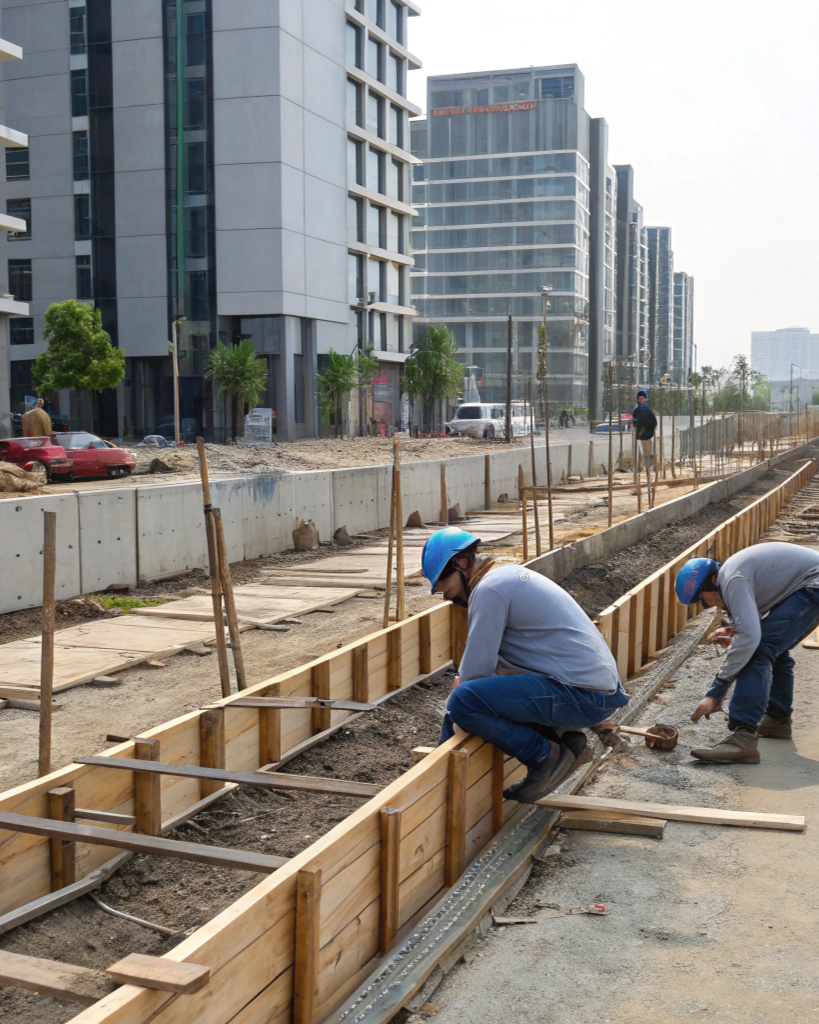
Every footing we pour starts with understanding what it needs to support and what it’s sitting on. We work from engineering plans when they’re required, and we know when to recommend getting a soil test or structural assessment before we start digging. Our crew’s trained in proper forming, steel placement, and concrete placement — the technical stuff that makes the difference between footings that last and ones that fail.
We’ve done footings for everything from small residential extensions to commercial builds, retaining walls that hold back tonnes of earth, and post holes that need cyclone-rated strength. That variety of work means we’ve seen most footing challenges Bundaberg can throw at us, and we know how to solve them properly.

Concrete Footing Needs for Bundaberg Construction
When you’re building in Bundaberg, the ground beneath your structure is just as important as what’s going up above it. Concrete footings are the hidden foundation that keeps everything stable — they’re what stops your house from settling unevenly, your retaining wall from tipping forward, or your fence from leaning after the first big storm. Around here, we’re not working with perfect soil. Bundaberg’s reactive clay expands when it gets wet and contracts when it dries out, which puts stress on any structure sitting on top of it.
That’s why proper footings aren’t optional; they’re the difference between a building that lasts and one that develops cracks within a few years. Whether you’re putting up a new home, adding a deck, or installing a boundary fence, the footings need to be engineered for local conditions. We dig to the right depth, use proper reinforcement, and pour concrete that’s mixed to handle the loads your structure’s gonna carry.

Concrete Footing Services We Provide
Preventing Common Footing Failures
| Common Problems | Our Solutions |
|---|---|
| Insufficient depth in reactive clay soils causes movement and cracking as the ground expands and contracts with moisture. Poor drainage around footings leads to water pooling and soil erosion. Inadequate reinforcement or incorrectly placed steel results in footings that crack under load over time. | We dig to stable soil depths based on local conditions and engineering specs. Proper drainage design ensures water moves away from footings, not towards them. Steel reinforcement gets positioned in the lower third where tensile forces occur, and concrete is properly compacted to eliminate voids and weak spots. |
Structural Importance and Stability
Footings aren’t just concrete poured into a hole — they’re the structural backbone that transfers all the weight from your building down into the soil. Without properly designed footings, you’re basically building on unstable ground, and that’s when you start seeing problems. Cracks in walls, doors that won’t close properly, uneven floors — these all trace back to foundation movement that could’ve been prevented with the right footings from day one.
Here’s what proper concrete footings give you:
- A load distribution that spreads the weight evenly across the soil instead of concentrating it in weak spots
- Settlement prevention that keeps your structure level even when the ground shifts with moisture changes
- Lateral stability for retaining walls and posts that need to resist sideways pressure
- Long-term structural integrity that protects your investment for decades, not just years
Footing Solutions for Challenging Building Sites
Not every building site in Bundaberg is flat, dry, and easy to work with. We’ve poured footings on sloped blocks where the ground drops away sharply, in flood-prone areas where water sits during the wet season, and in locations where soil tests came back showing poor bearing capacity. Each of these situations needs a different approach to get footings that’ll actually hold up.
For sloped sites, we often use stepped footings that follow the contour of the land instead of trying to level everything out. This saves on earthworks costs and provides better stability. In flood-prone areas, we go deeper and use higher-strength concrete mixes that can handle water exposure without deteriorating over time.
When you’re dealing with soft or reactive soils, sometimes standard footings just won’t work. That’s when we bring in engineered solutions — deeper excavations, wider footings to spread loads, or even pier footings that go down to more stable soil layers beneath the problematic surface material.
Frequently Asked Questions
Footing depth depends on what you’re building and soil conditions, but in Bundaberg, we’re typically going 600mm to 900mm deep for standard residential footings. Reactive clay soils mean we need to get below the active zone, where moisture changes cause expansion and contraction. For retaining walls or structures on slopes, depths can be greater. A soil test will tell us exactly what’s needed for your specific site.
For most standard residential work like fence posts or small retaining walls under a metre high, engineering isn’t required. But if you’re building a house, a tall retaining wall, or anything on difficult ground, you’ll need engineered footing designs that comply with Queensland building codes. We can let you know what’s required for your project and work directly from engineering plans when they’re needed.
Footings are part of the foundation system — they’re the concrete elements that sit directly on the soil and transfer loads down into the ground. The foundation includes footings plus everything else, like the slab, stumps, or piers that sit on top of them. So when you’re building a house, the footings go in first, then the rest of the foundation gets built on top of those footings.
We can pour footings in light rain, but heavy downpours are a problem. Water getting into the concrete mix weakens it, and standing water in the footing trench dilutes the concrete at the bottom of the pour. We monitor weather forecasts closely and plan pours for dry conditions when possible. If rain’s coming, we’ll either postpone the pour or have protection ready to cover fresh concrete until it sets.
Concrete reaches about 70% strength in 7 days, but we recommend waiting the full 28 days for maximum strength before applying heavy loads. For most residential projects, you can start framing after 7 days as long as you’re not loading the footings beyond their early strength capacity. Weather affects curing time too — hot dry conditions or wet weather both need special attention during the curing process.
Get Your Free Footing Quote Today
If you’re planning a build in Bundaberg and need concrete footings done properly, give us a call for a free quote. We’ll come out, have a look at your site, talk through what you’re building, and give you a clear price on what it’ll take to get your footings sorted. We’re servicing Bundaberg and surrounding areas, and we’re ready to help you get your project started on solid ground.
