
Marine Concrete for Coastal Properties
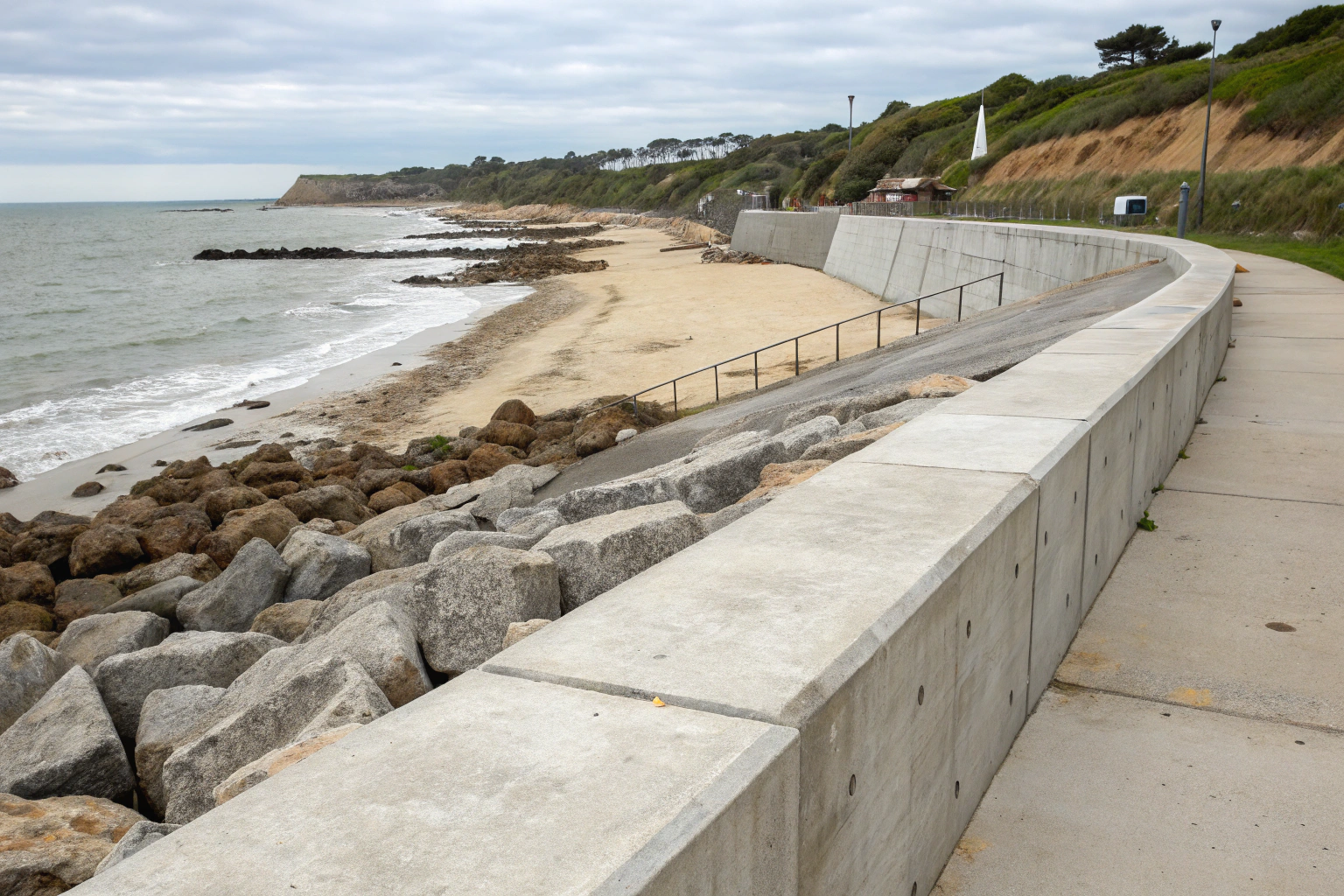
Burnett Heads sits where the Burnett River meets the Coral Sea, creating conditions that ordinary concrete won’t survive. Salt spray from ocean breezes, tidal water movement, and Queensland’s intense UV exposure demand specialised concrete mixes most contractors haven’t mastered.
Our marine-grade formulations incorporate admixtures that resist salt penetration and prevent the steel reinforcement corrosion that destroys standard concrete in coastal zones. When we pour boat ramps at the harbour, we’re accounting for twice-daily tidal cycles that submerge and expose concrete, plus abrasion from boat trailers hauling everything from tinnies to serious game fishing rigs.
The working harbour supports commercial fishing operations where concrete surfaces are used for forklifts moving cray pots, freezer trucks collecting catches, and daily washdown procedures. These aren’t residential driveways—they’re industrial surfaces requiring marine-grade specifications. We’ve been pouring marine concrete in this environment long enough to know what performs when the next king tide arrives.

Marine Concrete for Burnett Heads Coastal Properties
Burnett Heads sits where the Burnett River meets the Coral Sea, creating conditions that ordinary concrete won’t survive. Salt spray from ocean breezes, tidal water movement, and Queensland’s intense UV exposure demand specialised concrete mixes most contractors haven’t mastered.
Our marine-grade formulations incorporate admixtures that resist salt penetration and prevent the steel reinforcement corrosion that destroys standard concrete in coastal zones. When we pour boat ramps at the harbour, we’re accounting for twice-daily tidal cycles that submerge and expose concrete, plus abrasion from boat trailers hauling everything from tinnies to game fishing rigs.
The working harbour supports commercial operations where concrete surfaces are used for forklifts moving cray pots, freezer trucks collecting catches, and daily washdown procedures. These aren’t residential driveways—they’re industrial surfaces requiring marine-grade specifications that perform when the next king tide arrives.
Boat Ramps and Marine Access
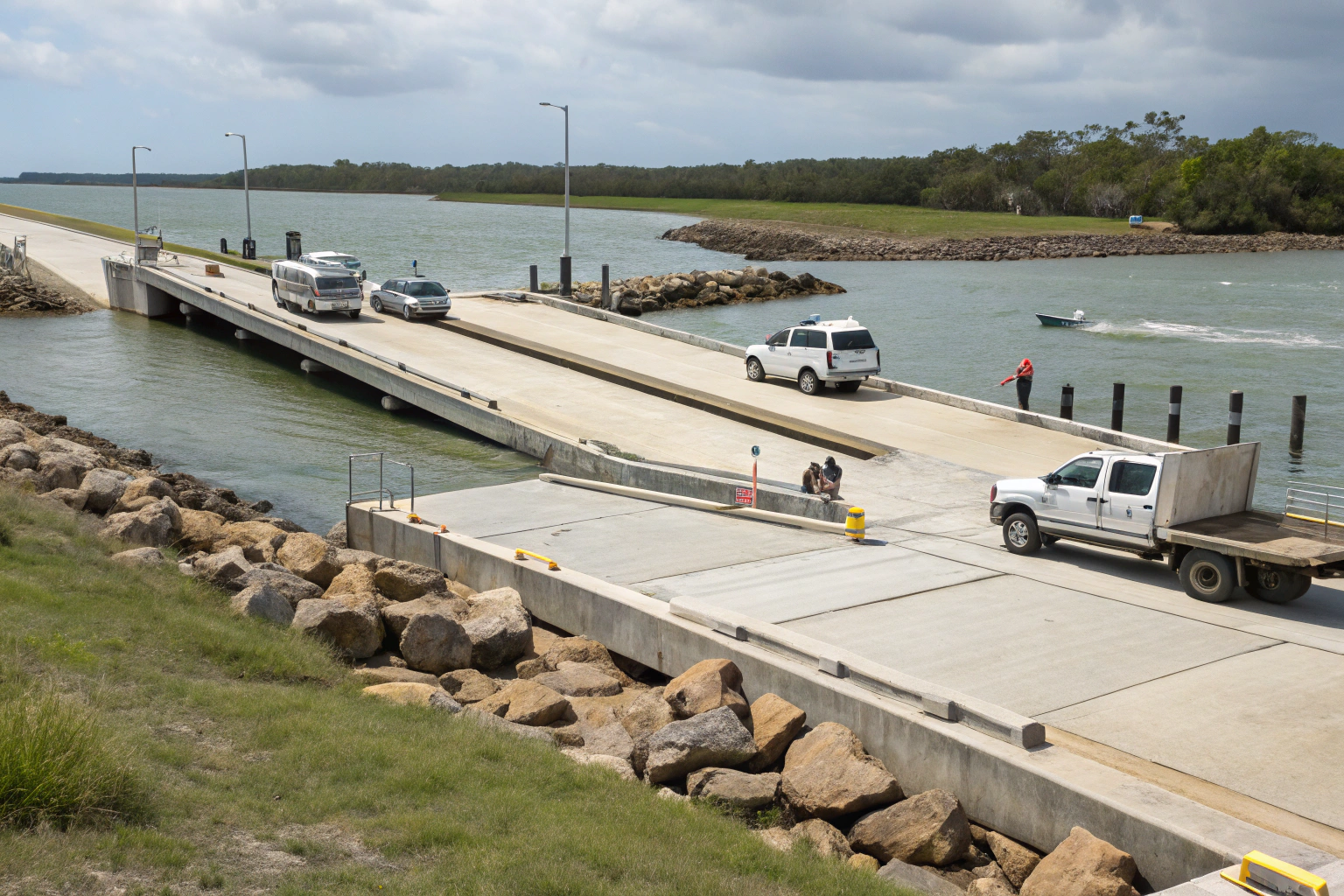
Boat ramps represent the most technically demanding concrete work in Burnett Heads. The public ramps on Zunker Street and Gellibrand Drive handle constant traffic during fishing season, with trailers launching boats across surfaces that spend hours underwater every tide cycle.
Successful construction requires precise grade calculations. Too steep and vehicles can’t retrieve boats. Too shallow and ramps extend too far into the river, increasing costs and permitting requirements. We engineer transition zones where concrete meets the riverbed to prevent undermining from tidal scour.
Fishing cleaning stations at the harbour and caravan parks need concrete pads that slope correctly for washdown, with integrated drainage preventing fish waste problems. The concrete resists acids and oils while providing slip-resistant surfaces when wet.
Riverfront and Coastal Retaining Walls
Properties along the Burnett River foreshore face unique challenges. Tidal movement creates hydraulic pressure that standard retaining walls can’t handle. Water levels fluctuate over two metres between tides, subjecting walls to forces that crack structures designed for static soil retention.
Our riverfront retaining walls include weep holes positioned to release water pressure without compromising structural integrity. Concrete mixes include waterproofing additives, preventing saturation, with reinforcement patterns distributing loads across the entire structure rather than creating stress concentration points.
Properties on Brooms Head Road facing ocean exposure need walls handling king tides and storm surge. We’ve engineered walls throughout Burnett Heads that maintain properties during significant weather events when wave action tests construction quality.

Caravan Park Concrete Infrastructure
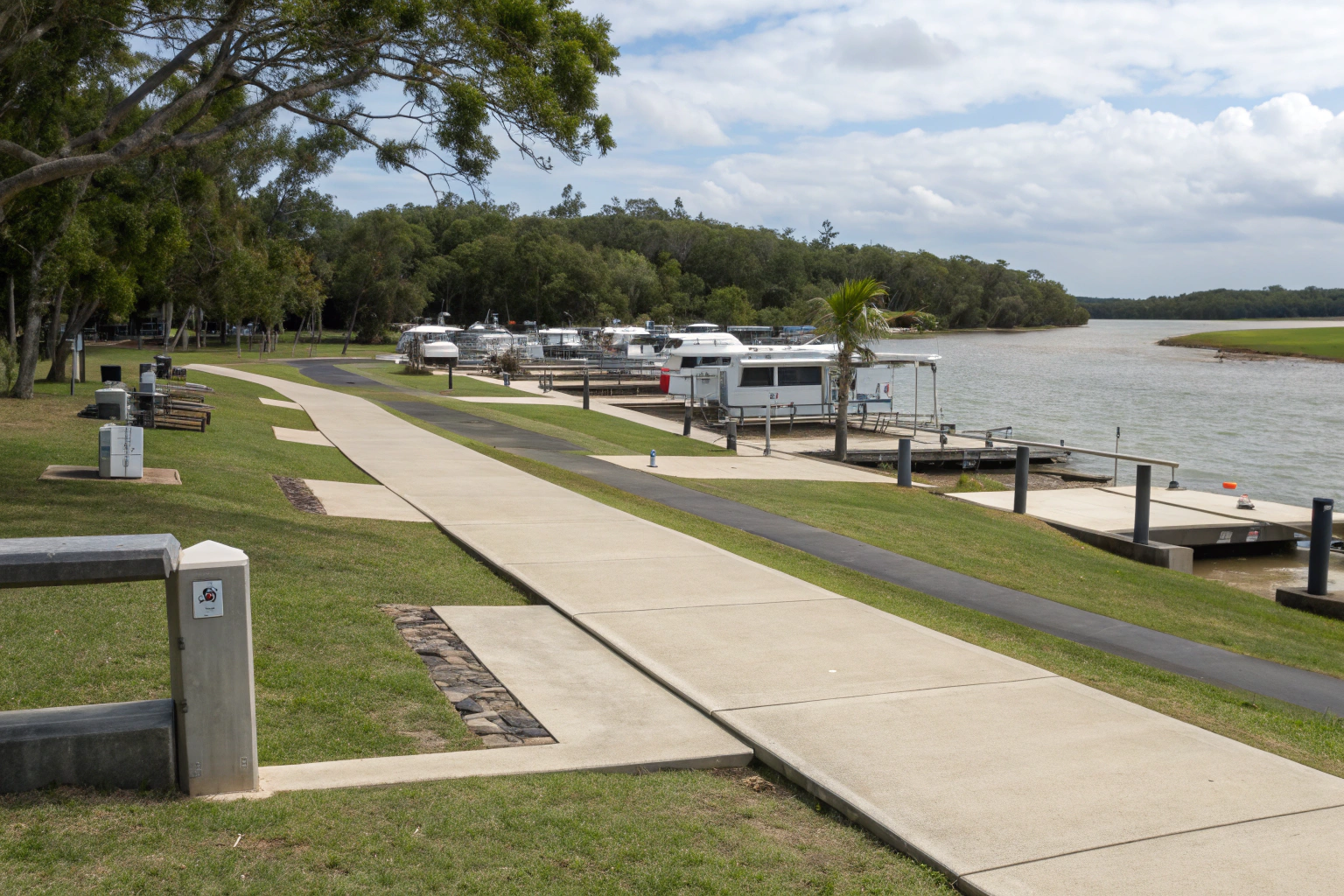
Burnett Heads’ tourism economy centres on caravan parks lining the riverfront and occupying positions near boat ramps. These facilities have concrete requirements differing substantially from residential work.
Caravan park driveways and camping pads endure heavier loads than typical concrete. Family caravans with full water tanks exceed three tonnes, concentrated on small wheel contact patches, creating a point loading standard that driveways have never experienced. Sites accommodate everything from camper trailers to large motorhomes, requiring sufficient load-bearing capacity.
Concrete must drain effectively during wet-season rainfall. We engineer proper fall into drainage systems, moving water away from camping areas while maintaining level surfaces where caravans set up. Slip resistance becomes critical for amenities blocks handling continuous foot traffic.
Reinforcement Standards for Marine Concrete
Marine concrete in Burnett Heads requires reinforcement specifications exceeding standard residential requirements. Salt penetration reaches steel reinforcement faster in coastal environments, initiating corrosion that expands the steel and cracks concrete from within. We engineer reinforcement placement and concrete cover depths that account for this aggressive chemical exposure.
Our marine concrete reinforcement includes:
- Minimum 50mm concrete cover over all steel in tidal zones (compared to 20mm for standard residential work)
- Hot-dipped galvanised mesh for surfaces exposed to salt spray
- Epoxy-coated reinforcing bar for boat ramps and harbour infrastructure
- Increased bar diameter and reduced spacing for commercial marine facilities
- Stainless steel reinforcement for critical applications in permanent tidal exposure
- Proper chair placement, maintaining specified cover throughout the pour
These specifications prevent the premature concrete failure that occurs when standard residential reinforcement practices meet Burnett Heads’ marine environment.
Drainage Systems for Burnett Heads Properties
Burnett Heads properties face drainage challenges from high water tables, tidal influences, and Queensland’s intense wet season rainfall. Concrete installations fail when drainage systems can’t handle these combined factors.
Properties near the riverfront contend with water tables that rise and fall with tidal cycles. Standard drainage solutions designed for inland locations don’t account for groundwater that fluctuates twice daily. We engineer drainage systems that function regardless of tidal height, preventing water accumulation under concrete slabs that causes cracking and settlement.
Boat ramp and caravan park drainage requires integrated systems directing washdown water, rainfall runoff, and tidal overflow away from concrete surfaces and camping areas. The drainage must comply with environmental regulations preventing contaminated runoff from entering the Burnett River while maintaining surfaces that remain usable during summer storms when tourism traffic peaks.

Burnett Heads Concrete Contractor Questions
Marine concrete incorporates specialised admixtures that resist salt penetration and includes higher-grade cement with specific mineral compositions that prevent chloride-induced corrosion. The reinforcement specifications, cover depths, and curing procedures all differ from standard residential work to account for tidal exposure, salt spray, and the aggressive chemical environment that coastal locations create.
Properly engineered boat ramps using marine-grade concrete specifications typically deliver 20-30 years of service in Burnett Heads conditions. Performance depends on traffic levels, maintenance practices, and whether the initial installation included correct reinforcement and adequate concrete cover over steel. Ramps that fail prematurely usually reflect inadequate specifications rather than environmental factors.
Tidal timing affects marine concrete work significantly. We schedule boat ramp installation, riverfront retaining walls, and other tidal zone projects around low tide periods that provide adequate working time before water returns. Spring tides and king tides may require postponing work until tidal ranges moderate and we can guarantee proper concrete placement and initial curing.
Standard caravan park camping pads require a minimum 100mm thickness with reinforcement mesh, increasing to 125-150mm for sites accommodating large motorhomes or areas with poor soil conditions. The concrete specifications include load-bearing calculations for vehicles exceeding three tonnes concentrated on small wheel contact areas, substantially heavier than typical residential driveway loading.
Salt-laden ocean breezes deposit chlorides on concrete surfaces throughout Burnett Heads, not just properties immediately on the waterfront. These chlorides penetrate concrete over time, reaching steel reinforcement and initiating corrosion that expands the steel, cracks the concrete, and ultimately destroys structural integrity. Marine-grade specifications prevent this deterioration through proper concrete cover, admixtures, and protective treatments applied during installation.
Top sights in Burnett Heads
